
Ultrasound-Guided Prolotherapy: A Precision Approach to Back Pain and SI Joint Instability
How ultrasound-guided prolotherapy works, the science behind regenerative dextrose injections, and why ReGenesis uses it for select back pain and sacroiliac joint instability cases.
Chronic back pain and sacroiliac (SI) joint instability are among the most common — and most frustrating — complaints seen in musculoskeletal medicine. Patients often cycle through years of medications, physiotherapy, chiropractic care, and image-guided steroid injections, only to find that their pain returns, their function plateaus, or that the underlying mechanical problem was never truly addressed. For a meaningful subset of these patients, the missing ingredient is not another anti-inflammatory or another round of manual therapy, but a targeted attempt to restore the integrity of the connective tissue itself.
That is precisely what prolotherapy is designed to do. When delivered under direct ultrasound guidance, prolotherapy becomes a precise, anatomically informed regenerative procedure rather than a blind injection. At ReGenesis Longevity Clinic™, we use ultrasound-guided prolotherapy in carefully selected patients with mechanical back pain and SI joint instability, and we recognize that it has additional applications across the musculoskeletal system that warrant individualized assessment.
What Is Ultrasound-Guided Prolotherapy?
Prolotherapy — short for "proliferation therapy" — is a regenerative injection technique in which a small volume of an irritant solution, most commonly hypertonic dextrose (typically 12.5–25%), is injected into ligaments, tendon entheses, joint capsules, or fascial structures that are painful, lax, or partially compromised. The dextrose creates a brief, controlled inflammatory response at the injection site, which in turn triggers the body's natural healing cascade: cytokine release, fibroblast recruitment, collagen synthesis, and gradual remodeling of the connective tissue.
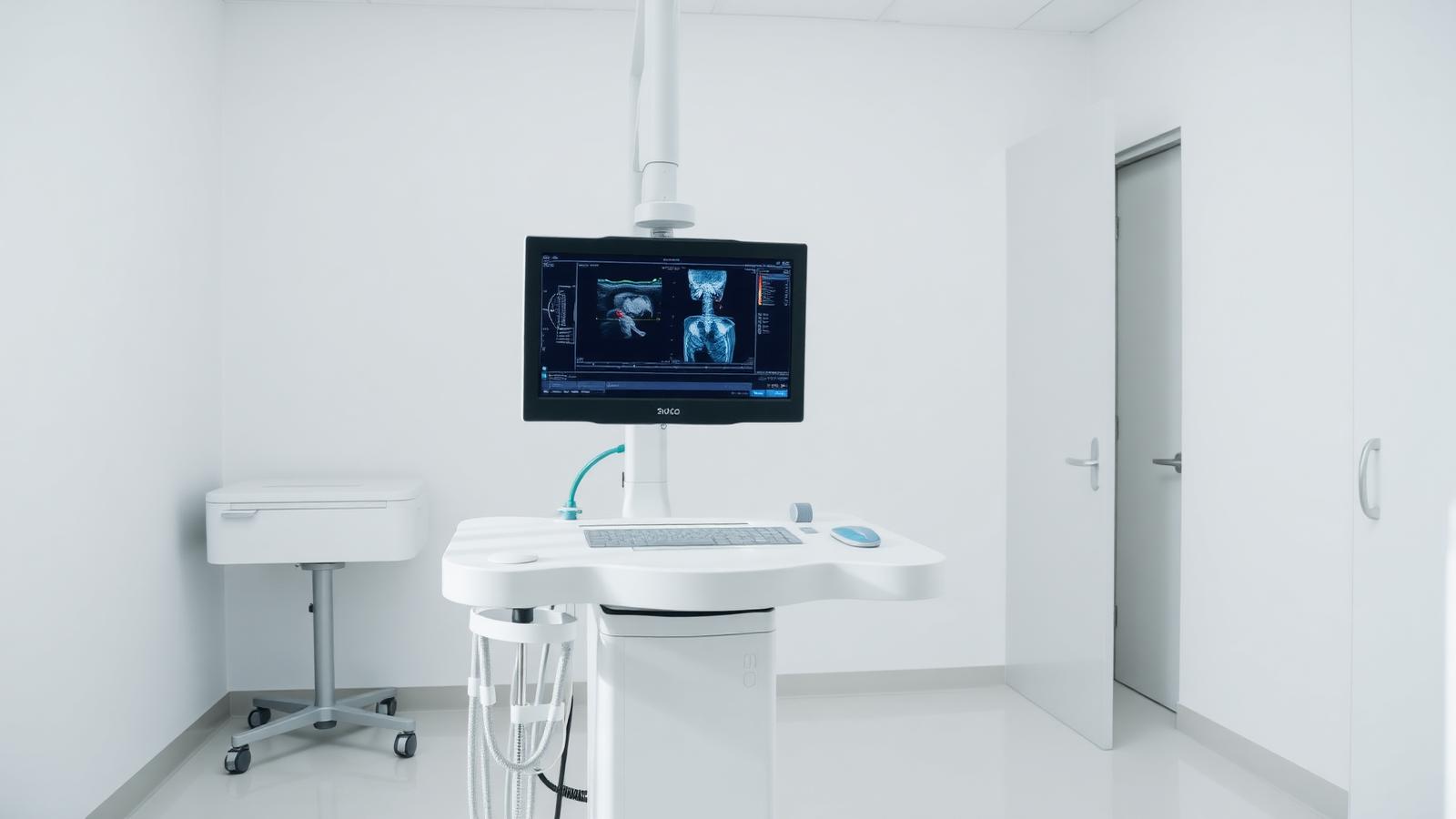
The "ultrasound-guided" component is what elevates modern prolotherapy from a historical technique into a precision procedure. Using a high-frequency musculoskeletal ultrasound probe, the clinician visualizes the target structure in real time — the long dorsal sacroiliac ligament, the iliolumbar ligament, the supraspinous and interspinous ligaments, a specific tendon enthesis, or a joint capsule — and watches the needle advance to the precise tissue plane before delivering the solution. This means the injectate goes exactly where the pathology is, not approximately near it, and surrounding nerves and vessels can be deliberately avoided.
How Ultrasound Guidance Changes the Procedure
Landmark-based (blind) prolotherapy depends entirely on palpation and surface anatomy. In the lumbar and sacroiliac region, where ligaments lie deep to muscle and fascia and the bony landmarks vary considerably between patients, blind injection accuracy is poor. Ultrasound guidance changes the equation by allowing direct visualization of the needle tip, confirmation of correct tissue placement, and observation of the injectate spreading along the intended structure. The result is a more reproducible, safer, and more clinically meaningful procedure.
The Science Behind Prolotherapy
Prolotherapy works by leveraging the body's own healing biology rather than overriding it. The mechanism is best understood in three overlapping phases.
1. Controlled Inflammatory Stimulus
Hypertonic dextrose creates a localized osmotic and chemotactic stimulus at the injection site. This briefly recruits inflammatory mediators — platelets, neutrophils, and macrophages — and upregulates growth factors such as transforming growth factor-beta (TGF-β), platelet-derived growth factor (PDGF), and connective tissue growth factor (CTGF). Importantly, this is a brief, self-limited inflammatory pulse, not the chronic, low-grade inflammation that drives degenerative disease.
2. Fibroblast Activation and Collagen Synthesis
Within days of the injection, fibroblasts proliferate at the treatment site and begin laying down new type I and type III collagen. Over subsequent weeks, this collagen matures, cross-links, and is gradually remodeled along lines of mechanical stress. In ligaments and tendon entheses that have become attenuated or partially failed, this process can meaningfully restore tensile strength and reduce pathological laxity.
3. Modulation of Pain Signaling
Prolotherapy also appears to influence peripheral pain signaling. Hypertonic dextrose has been shown to reduce activity in small unmyelinated C-fibers and to downregulate neurogenic inflammation. This may explain why many patients report meaningful pain relief well before any structural collagen remodeling could plausibly account for the improvement.
What the Evidence Says
The clinical evidence base for prolotherapy has matured significantly over the past two decades. Randomized controlled trials and systematic reviews have reported clinically meaningful benefits for chronic low back pain associated with ligamentous and SI joint dysfunction, knee osteoarthritis, lateral epicondylitis, Achilles tendinopathy, and chronic groin pain in athletes. The strongest signals tend to come from studies that use image-guided injection, anatomically appropriate target selection, and a structured series of treatments rather than a single injection.
Like all regenerative therapies, prolotherapy is not a universal solution, and the literature is honest about that. It is most effective when the underlying problem is mechanical instability, ligamentous laxity, or enthesopathy — and when patient selection is rigorous.
Indications: When Prolotherapy Makes Clinical Sense
Prolotherapy is not a first-line treatment for every musculoskeletal complaint, and at ReGenesis we are deliberate about who we recommend it for. The strongest candidates share a common pattern: persistent mechanical pain that has not responded adequately to conservative care, with clinical or imaging evidence of ligamentous laxity, joint instability, or enthesopathy.
Mechanical Low Back Pain with Ligamentous Involvement
A substantial proportion of chronic low back pain originates not from the disc or facet joint in isolation, but from the posterior ligamentous complex — the supraspinous, interspinous, and intertransverse ligaments — and from the iliolumbar ligaments that anchor the lumbar spine to the pelvis. When these structures become attenuated, the segment loses its passive stabilizers, and patients describe a familiar pattern: a dull, deep ache that worsens with prolonged static postures, mid-range loading, or rotational movements, and that flares unpredictably even after "doing everything right." In appropriately selected patients, ultrasound-guided prolotherapy of the affected ligaments can reduce pain and improve segmental stability.
Sacroiliac Joint Instability and Dysfunction
The sacroiliac joint is held together primarily by the strongest ligamentous complex in the body — the posterior sacroiliac, long dorsal sacroiliac, sacrotuberous, and sacrospinous ligaments. When these ligaments become lax (after pregnancy, trauma, prolonged asymmetric loading, or hypermobility) the joint can become a persistent generator of buttock, low back, and posterior thigh pain. SI joint instability is often missed on standard imaging and is frequently misattributed to lumbar pathology. Ultrasound-guided prolotherapy of the posterior SI ligaments is one of the few interventions that directly targets the mechanical cause rather than simply suppressing the resulting inflammation.
Other Musculoskeletal Indications
Beyond back and SI joint applications, ultrasound-guided prolotherapy has been used for a wide range of other indications — including knee osteoarthritis, lateral and medial epicondylitis, plantar fasciitis, Achilles and patellar tendinopathy, chronic groin and adductor pain, rotator cuff tendinopathy, and selected cases of cervical instability. At ReGenesis, our clinical focus for prolotherapy is on back pain and SI joint instability. Other indications can absolutely be considered, but they require an individualized assessment to determine whether prolotherapy is the right tool, whether a different regenerative option is more appropriate, or whether the patient would be better served by another pathway.
What to Expect at ReGenesis
A prolotherapy program at ReGenesis Longevity Clinic™ begins with a thorough clinical evaluation — history, physical examination, review of any prior imaging, and a focused musculoskeletal ultrasound assessment of the suspected pain generators. This is essential. Without a clear understanding of which structures are actually responsible for the pain, no injection — regenerative or otherwise — can be expected to deliver consistent results.
The Procedure Itself
Each treatment session is performed in-clinic and typically takes 30 to 45 minutes. The skin is cleaned and a sterile field established. Using high-frequency ultrasound, the target ligaments or entheses are visualized in real time, and a fine needle is advanced under direct visualization to each treatment point. A small volume of dextrose solution — sometimes combined with a low-dose local anesthetic — is delivered to each site. Most patients describe the procedure as briefly uncomfortable rather than painful, and they walk out under their own power.
After the Procedure
Patients commonly experience mild post-injection soreness and stiffness for 24 to 72 hours — this is the expected inflammatory response and is, in fact, part of the mechanism. Patients must avoid all non-steroidal anti-inflammatory medications (NSAIDs) — such as ibuprofen, naproxen, and aspirin — for the entire duration of the treatment series, not just in the days following each injection. Blocking the inflammatory cascade with NSAIDs at any point during the program undermines the regenerative response that the treatment is designed to trigger. Acetaminophen, heat, gentle movement, and adequate hydration are recommended instead for symptom management.
Treatment Series and Realistic Timelines
Prolotherapy is a series, not a single shot. At ReGenesis, treatments are typically delivered every 3 weeks. Men can generally expect to require 4 to 6 treatments to complete a course, while women typically require 6 to 9 treatments — a difference largely attributable to hormonal influences on ligamentous laxity and connective tissue remodeling. Response is reassessed after each round, and meaningful improvement is typically appreciated by the second or third session. Concurrent rehabilitation — targeted strengthening, motor control work, and load management — is strongly encouraged to consolidate the gains.
Cost of Treatment
At ReGenesis Longevity Clinic™, ultrasound-guided prolotherapy is offered at $250 per visit for a single-site treatment and $300 per visit for a two-site treatment. Prices are subject to change. The total cost of a complete program will depend on the number of sites treated and the number of sessions required, which is determined during your initial assessment.
Who Is Not a Good Candidate?
Prolotherapy is not appropriate for every patient. Active local infection, uncontrolled bleeding disorders, severe needle phobia, and certain inflammatory arthropathies in active flare are contraindications. Patients whose pain is primarily neuropathic, who have severe structural pathology better addressed surgically, or who have unrealistic expectations of a single-session cure are also unlikely to benefit. A careful upfront assessment is what allows us to say honestly whether prolotherapy is — or is not — the right tool for a given patient.
How Prolotherapy Fits Within ReGenesis' Regenerative Program
Prolotherapy is one option within a broader regenerative musculoskeletal program at ReGenesis. Depending on the clinical picture, we may recommend prolotherapy alone, platelet-rich plasma (PRP), hydrodissection for nerve entrapment, hydro-dilation for adhesive capsulitis, or a combination tailored to the specific pathology. The choice is driven by the diagnosis and the tissue we are trying to influence, not by a one-size-fits-all protocol.
If you are dealing with persistent back pain, suspected sacroiliac joint instability, or another musculoskeletal complaint that has not resolved with conventional care, a focused assessment is the right next step. Our team will determine whether ultrasound-guided prolotherapy is an appropriate option for you, what realistic outcomes look like in your specific case, and how it should be integrated with the rest of your care.
Book a Regenerative Medicine Assessment
To learn more about ultrasound-guided prolotherapy at ReGenesis Longevity Clinic™, or to discuss whether you are a candidate for treatment of back pain, SI joint instability, or another musculoskeletal condition, please book a consultation or visit our Regenerative Medicine Edmonton and Regenerative Medicine Calgary program pages.